The client
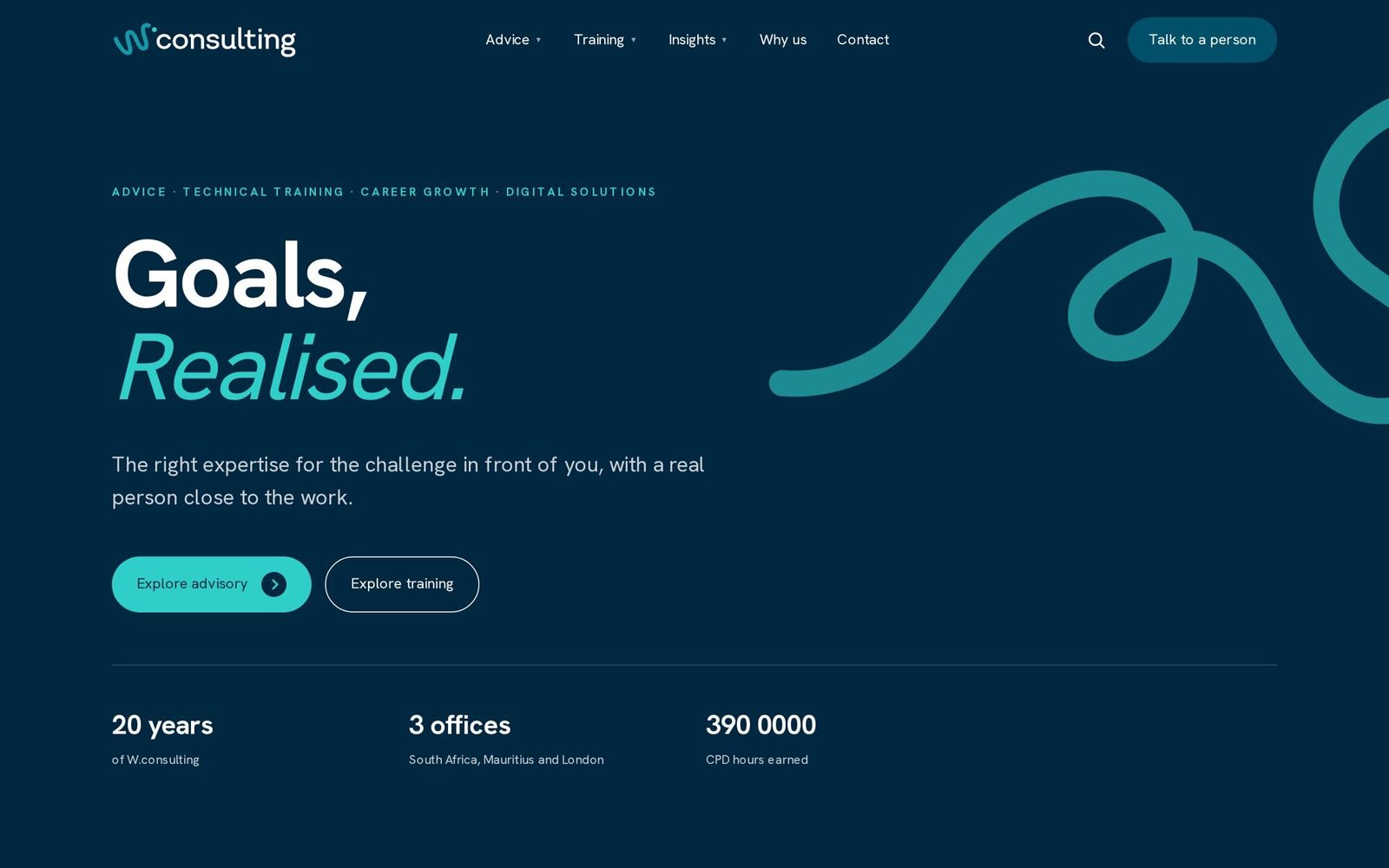
W.consulting is a specialist advisory and training firm working across IFRS advisory, IFRS valuations, sustainability reporting and specialist technical training, with offices in Johannesburg, Mauritius and London.
After more than 20 years in business, W. refreshed its identity to tell a fuller story: expertise that works together, connected by a common thread, focused on turning client goals into reality. Goals. Realised.
The brief
Take the new brand from Sol Creative and turn it into a website the W. team can run and grow themselves. That meant:
- A proper HubSpot theme, not a page builder patchwork
- Every section editable by marketing without a developer
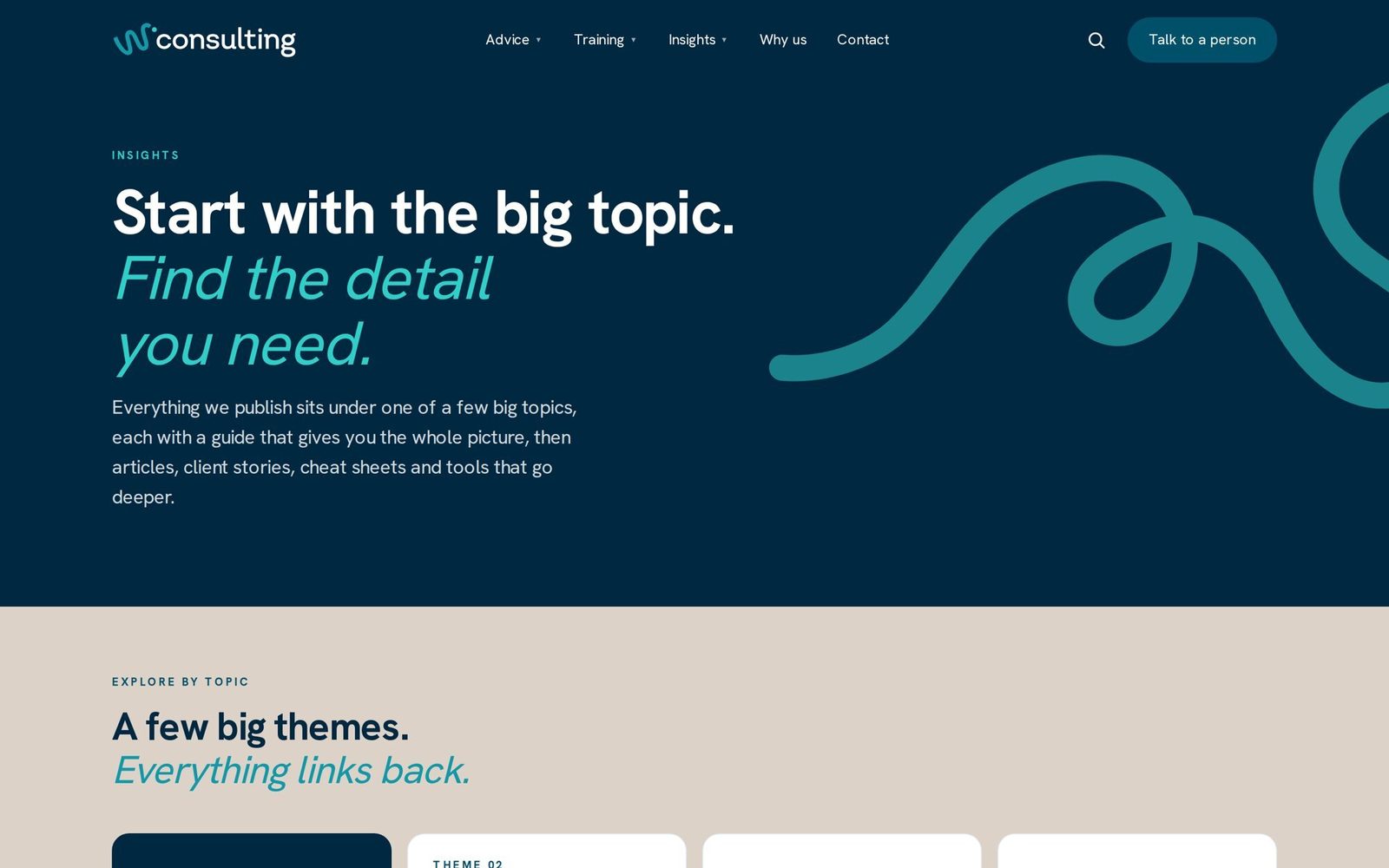
- Content that lists itself: insights, case studies and downloads feeding their own hub pages
- Gated technical downloads that actually deliver
- Search that helps visitors find the right route fast
- WCAG 2.1 AA accessibility and British English throughout
- Live on the new domain, wconsulting.global, in time for the brand launch
The brand: Julie Sol and Sol Creative
"A strong, clear identity to work from made our job so much easier."
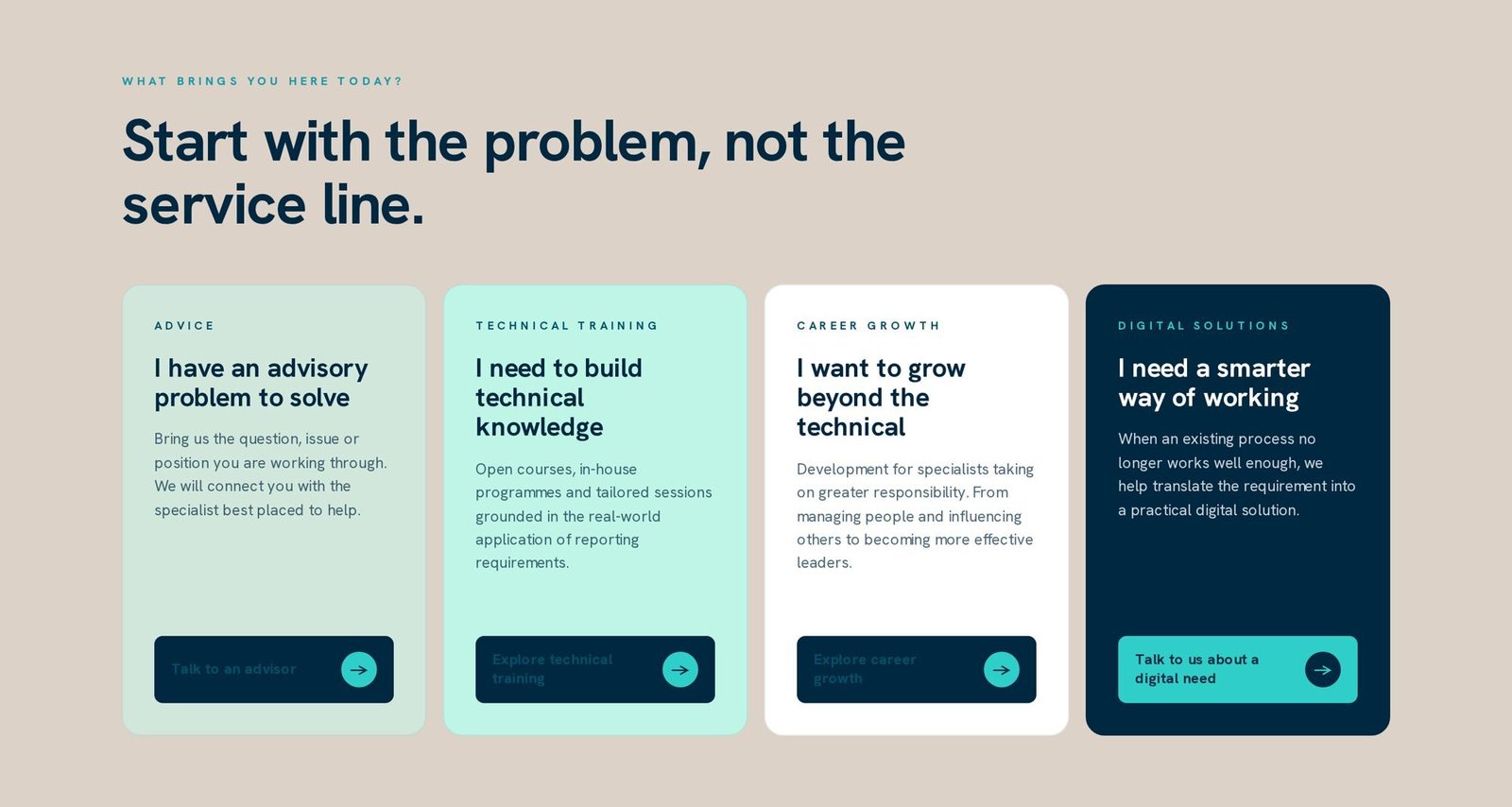
Julie Sol and the team at Sol Creative led the brand. The identity centres on the W mark and its thread: a teal squiggle and aqua dot that became the visual system for the whole site. We treated the brand as the source of truth and built the theme so it could carry it faithfully, from the two tone logo lockups to the thread underline that highlights key phrases on every page.
Brand identity by Julie Sol, Sol Creative. Website design and build by Muloo.
What we built
How we built it
One architect, directing the agents
This is not AI replacing people. One experienced HubSpot architect set the architecture, made every call and signed off the quality. A set of purpose built agents took on the repetitive work that normally slows a project down: converting designs to HubL, generating module fields, writing CSS against the token system, validating every upload and auditing the rendered site.
The architect decides. The agents execute. Nothing ships without a human check.
Our agent toolkit
| Agent or tool | What it did on this build |
|---|---|
| Claude Design | Produced the clickable 25 page prototype from the brand, used for client sign off |
| HubSpot Theme Architect agent | Set the theme structure, token scale and template map |
| HubSpot Module Builder agent | Built the module library, fields and editor defaults |
| HubSpot Senior Developer agent | HubL, HubDB wiring, search, forms and video integration |
| HubSpot Content Hub agent | Page setup, blog, content index and publishing |
| HubSpot Release QA agent | Accessibility, hover state and design parity audits before release |
| Theme validator | Custom script chained to every upload, so a broken build cannot reach the portal |
| HubSpot CLI and MCP | Deployment, portal inspection and CRM checks |
Milestones: the four week build
Week 1: Design to sign off
- Brand received from Sol Creative
- Full prototype of all 25 page templates built in Claude Design, staged as a clickable sitemap
- Every client review action logged against a reference code so the tracker, the brief and the build stayed in sync
Week 2: Theme foundation
- HubSpot theme scaffolded and first uploaded to the client portal: 75 of 75 files, zero errors
- One token source (colour, type, spacing, radii) driven by theme settings, so W. can adjust the brand without code
- Shared section shell adopted so every module inherits spacing, tone and buttons consistently
- Design parity pass: logo lockups, footer grid, thread underline and header search matched to the approved design
Week 3: Modules, content and integrations
- Module library completed: 29 modules for editors, six drag and drop sections
- Insights hub wired to the blog; case studies and downloads indexed through HubDB so listings populate themselves
- Site search styled and live; Ask W. overlay turned into a live search across the site
- Gated cheat sheet downloads rebuilt with delivery workflows and fixed consent
- Intro call form placed on the meetings page
Week 4: QA and launch
- Accessibility, hover state and responsive audits
- Video, forms and email delivery tested end to end
- Placeholder sweep and final client checks
- DNS go live managed with the W. team: domain connected, SSL issued, redirects and linking checked
- Launch guidance: a go live checklist and a walkthrough for the marketing team
- 16 September 2026: live, announced alongside the brand launch
Time saved
A build that would usually take a full team months, delivered in weeks without cutting corners.
| Traditional agency build | Muloo agentic build | |
|---|---|---|
| Timeline | 12 to 16 weeks | 4 weeks |
| Team | PM, UX designer, 2 front end developers, HubSpot developer, QA | 1 senior architect and agents |
| Design to prototype | 3 to 4 weeks | Under 1 week |
| Theme and module build | 5 to 7 weeks | 2 weeks |
| QA and accessibility | 2 weeks, often squeezed | Continuous, automated on every upload |
| Handover | Documentation written at the end | Build conventions, SOPs and notes captured as the work happened |
HubSpot platform in play
- Content HubCustom theme, HubL modules, drag and drop sections, theme settings
- Design Manager and CLIVersion controlled theme deployment
- HubDBContent index powering case study and download listings; standards register
- BlogPerspectives insights hub with tag based feeds
- Site SearchStyled results page and live search overlay
- FormsGated downloads and intro call request with required consent
- Workflows and EmailAutomated cheat sheet delivery
- Subscription typesConsent captured cleanly at the point of download
- HubSpot VideoBrand film embedded on the About page
- MeetingsIntro call booking
- Breeze Customer AgentAsk W., launching next, routes standards questions to the right service, course or expert
- Knowledge BaseTechnical articles being written to ground the agent
- Domains and DNSPrimary domain cutover, SSL and redirects on wconsulting.global
Challenges and how we solved them
Two design generations in one site
The prototype arrived in stages, and older legal pages depended on an earlier component set. We isolated the legacy pages so the new site and the old dependencies never collided, then rebuilt them properly in HubSpot.
Accessibility built in, not bolted on
The first pass of the button styles set white text on teal, which fails WCAG AA. We set a hard rule: teal is never a background for white text; marine is. Every primary button and form button was corrected, and highlight text was reworked so it no longer broke mobile layouts.
Content that should list itself, but can't
HubSpot cannot list website pages by template. Case studies and downloads needed to appear automatically on hub pages. We built a HubDB content index as the pointer to each page, so listings populate from one table and pages stay real pages.
Downloads that never delivered
We found the old cheat sheet funnel had been silently dropping delivery emails because consent was optional, and one workflow had no enrolment criteria at all. We rebuilt the forms, the workflows and the consent step. The event log now reads SENT where it previously read DROPPED.
HubL that fails silently
Several HubSpot behaviours fail without an error: blog functions inside macros, type coercion in conditions, repeaters that can never be emptied, and unknown blog IDs that fall back to the default blog. We documented each one and extended our validator so the next build catches them automatically.
A deployment regression
Mid build, an upload from an out of date working copy quietly rolled back a set of shipped fixes with no error. We traced it, restored from the main source, and added a pre upload check that confirms the source before anything reaches the portal.
An AI assistant that stays honest
The prototype imagined Ask W. answering technical questions. For an IFRS advisory firm, a confident wrong answer is a real risk. We kept the overlay as a fast live search and moved standards questions to a Breeze Customer Agent grounded in W.'s own reviewed content, with clear rules: it routes people to the right expert, it does not give technical conclusions.
SOPs adopted for future builds
Every lesson on this project is now a standard on the next one.
- Reference codes on everything. Every client action gets a code that follows it through the tracker, the brief, the commit and the progress report.
- Validator chained to upload. No theme upload runs unless the validator passes first.
- One source of truth for tokens. Brand values live in theme settings only; no hard coded colours in modules.
- Shared section shell. New modules inherit spacing, tone and buttons; they never own them.
- AA contrast rules set up front. Approved text and background pairings defined before the first module is built.
- Upload only from the main source. Confirm the commit before every deploy; remove finished working copies.
- Empty module defaults. No plausible looking fake content in field defaults, ever.
- Feed ready repeaters. Any repeater that can be fed from the blog or HubDB allows zero manual items.
- Legacy editor forms for gated content. So forms inherit theme styling; full GET and replace when editing via API.
- Delivery workflows tied to the form, tested end to end. Swapping a form means rebuilding its workflow and checking the email log.
- Known HubL traps checklist. Silent failures documented and checked in QA.
- AI grounded before it goes live. Agents answer only from reviewed content, with human handoff and clear limits.
- Knowledge captured during the build. Conventions and lessons written as the work happens, so handover is ready on launch day.